
Cal Cases is a community of 29 people—women, men, children and young people—8 km from Santa Maria d’Oló (Moianès). Most of the adults come from urban backgrounds; we started organising in 2007 around the Rosa de Foc ateneu (a community social and cultural centre) in Gràcia, Barcelona, after the major mobilisations of the anti-globalisation movement.
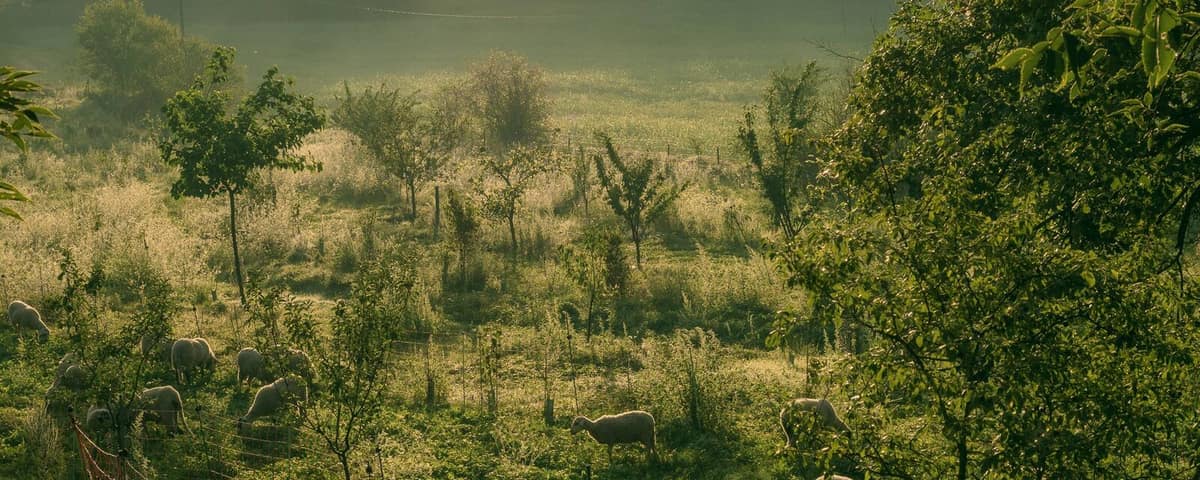
The property has 4 hectares of cultivated land and 13 hectares of woodland. For housing, there’s a main farmhouse with shared spaces (kitchen, dining room, laundry, pantry, cold store, workshops, library, hostel) and 14 diverse living units with private areas. We manage our own production of most of our food (bread, pasta, vegetables, wine, beer, honey, eggs), our energy (solar thermal, photovoltaic and firewood), and build our own spaces using natural materials.
29people
4 Haof cultivated land
13 Haof woodland
14living units
We work by assembly, making decisions by consensus. We organise around 4 main areas:
- Living Together: promoting wellbeing, care, emotional growth, and individual and collective joy.
- Habitat: managing the economy, energy, farmhouse, shared spaces and their surroundings.
- Biotope: managing food, fields, forests and water.
- Networks: networking and ties with other projects, as well as communication and training.
Cal Cases was the first housing co-operative in the Spanish state under a right-of-use agreement (cessió d’ús), and one of the project’s main political aims is to spread this model of communal, transformative living and co-operative housing across Catalonia through talks at ateneus, seminars and conferences, open days welcoming visitors, and through social media, the website and the press. We are also committed to deep local roots: we take part in spaces and collectives working to put life at the centre in the face of capitalism, such as the Ecoxarxa del Bages, the Ateneu Cooperatiu de la Catalunya Central, the Associació de Veïns i Veïnes de Sant Joan d’Oló and the Ateneu Popular la Falç d’Artés.