In the press:
- Directa: Restituir l’ànima comunal a les valls del Prepirineu
- Pallars Digital: El projecte «Fem cumó» de Sapeira, guanyador de l’Emprius 2024, presenta el seu documental
- Notícies de la Terreta: ”Fem cumò. Passat, present i futur del comunal de Sapeira i la Vall de la Terreta”, Premi Emprius 2024
- Jornal: Fem Cumò: reconstruir el comú per habitar el territori
- Revista SABC: «Fem cumò». Propuesta ganadora del Premio Emprius 2024
- Arrels: “Fem cumò” guanya el premi Emprius, dedicat a promoure el comunalisme
- Jornal: Usnea RP, un col·lectiu agroecològic del Pallars Jussà, guanya el premi de la Fundació Emprius
- Pallars Digital: Una proposta pallaresa guanya el Premi Emprius 2024
- September: «Fem cumò», proposta guanyadora del primer Premi Emprius
- Arrels: Premi de 800 euros per a investigacions al voltant del comunalisme
- Jornal: La Fundació Emprius impulsa un premi a la investigació i divulgació sobre comunalisme
- September: La Fundació Emprius convoca un premi per posar en valor el comunalisme
Winning proposal:
“Fem cumó. Passat, present i futur del comunal a Sapeira i a la vall de la Terreta” (“Doing cumó: past, present and future of the commons in Sapeira and the Terreta valley”)
At Emprius we’re organising a first edition of a competition that will award €800 to a proposal for research, investigation, reflection or dissemination on communalism.
We want to highlight communalism: what has existed in the past, which generally occupies a non-existent or marginal place in our historical memory; what remains in the present and what we’re trying to recreate; and communalism as a future proposal to face the crises and challenges ahead at a social, human and ecological level.
We understand communalism as a whole range of forms of social organisation related to the communal and collective ownership and management of resources, and communal rights over these; direct democracy and active community participation; social relations of reciprocity and mutual aid… We advocate for a social transformation where these types of structures, forms and logics carry increasing weight, because we believe they can provide solutions to many problems we face.
We’d like a wide variety of people to take part. Being part of the academic or university sphere is not a requirement. Anyone living in the Catalan Countries can take part.
Below we describe some ideas related to possible proposals to submit that come to mind to help you think about possibilities and encourage different types of people to enter the competition:
- Choose a topic for a degree or master’s project for the 2024–2025 academic year focused on this subject. It could be approached from different academic disciplines: history, sociology, geography, environmental sciences, political science, philosophy, anthropology…
- Journalistic proposals. Choose a little-known topic that has been studied but hasn’t reached public opinion, and propose a process of public information, journalism and/or social dissemination activities.
- Conduct an in-depth study of everything there is on communalism in a specific aspect or geographical area, and create a summary learning resource, either written or audiovisual.
- Studies on how different systems of neighbourhood direct democracy worked (historic town universitats, councils, communal boards…), and also how they federated beyond the local level, or how they related to state powers.
- What communal assets and emprius (communal lands) still exist currently in the Catalan Countries? What problems and challenges do they face? How could they be strengthened to regenerate?
- In Cercs, local people are reclaiming the village’s emprius as a strategy to defend the land. In Salou, too, the site where they want to build the Hard Rock complex is called “Emprius Nord”. It would be interesting to pull on the thread of these cases, or see whether other struggles to defend the land can be linked to reclaiming the commons.
- Oral history work: video documentary with interviews. For example, of people who participate in processes of communal management of resources that still exist.
- Research in archives. Look for practices of communalism in historical documentation in municipal or regional archives and compile them in a format that can more easily reach public knowledge.
- Dissemination projects that include artistic elements or formats (murals, illustrations, music, theatre…).
- Studies of the different historical attacks on communal assets in the Catalan Countries: the 18th century and the Nova Planta decree, the 19th century and the liberal disentailments, the 20th century and Francoism… You might also look for episodes before these or very recent episodes.
- A realistic fiction exercise about a region that over 50 or 100 years has undertaken a process of transformation and transition towards a system with a high degree of communalism.
- How can communalism solve the different challenges and problems we face in the 21st century?
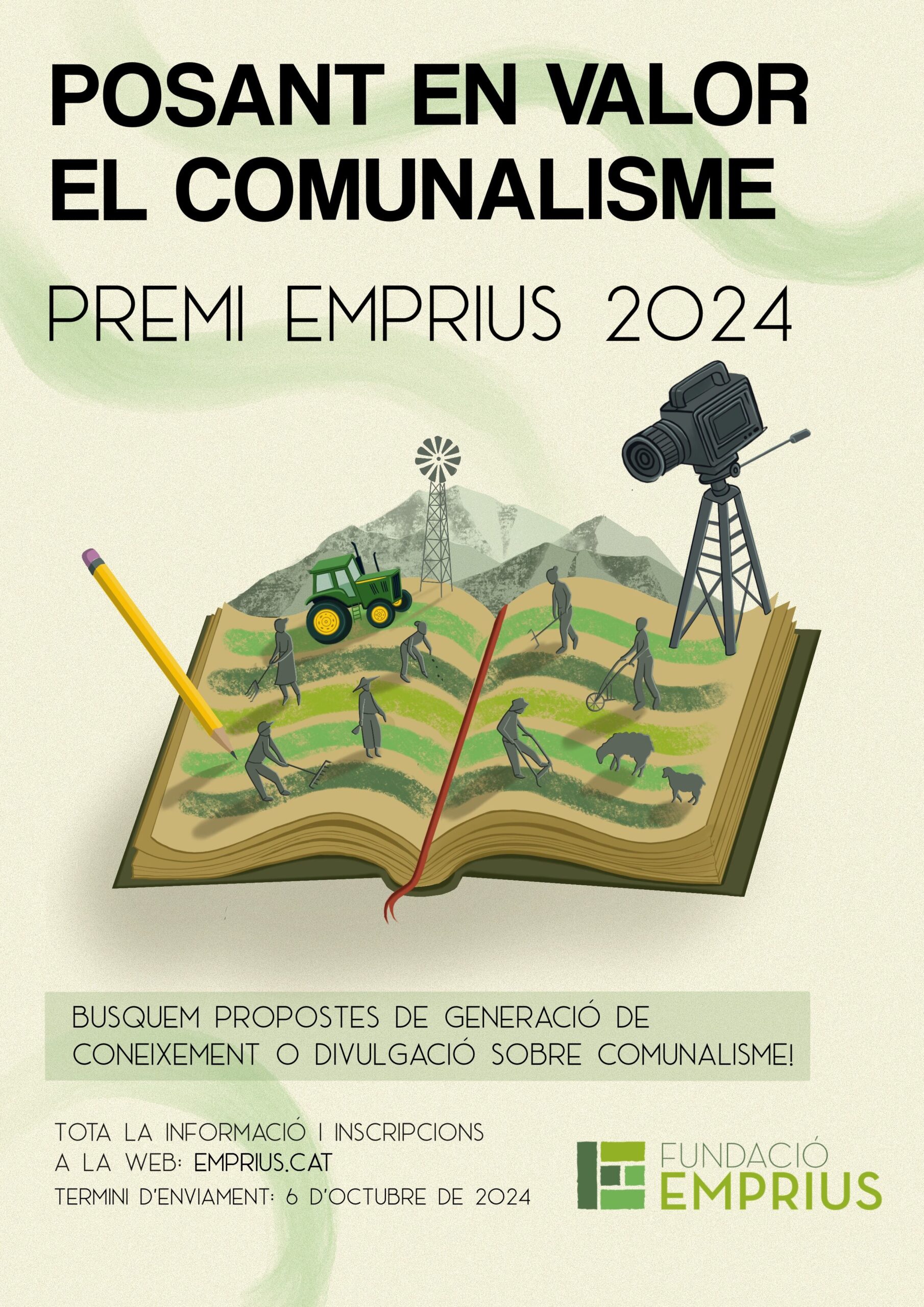
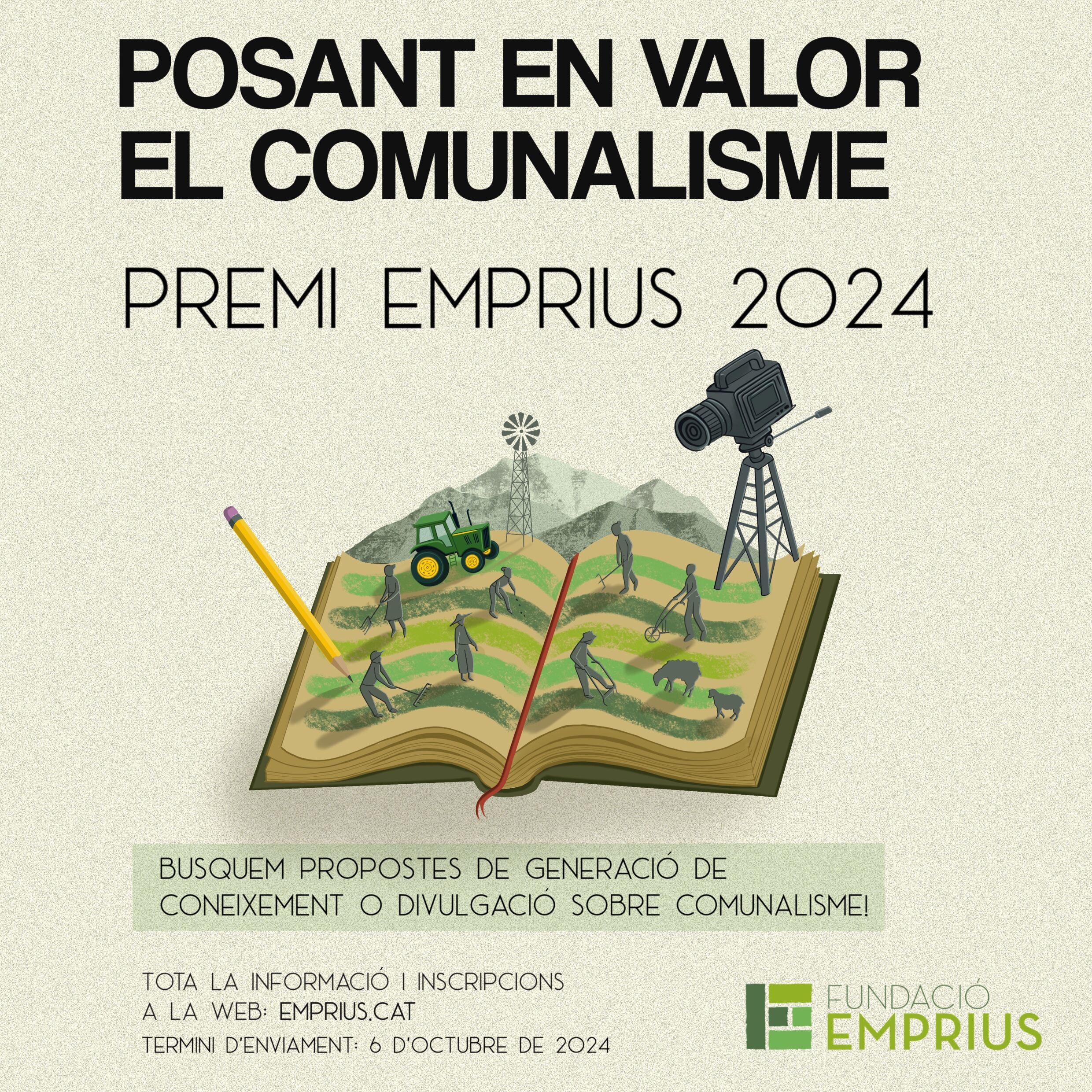
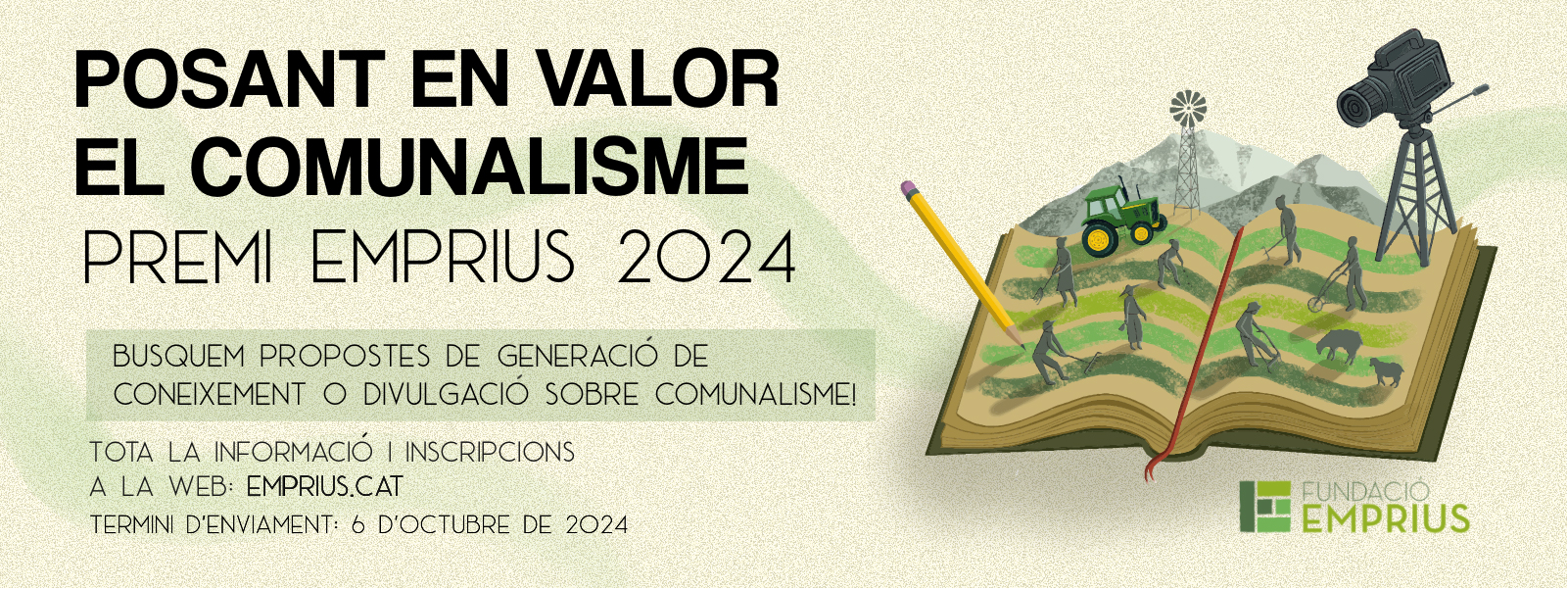
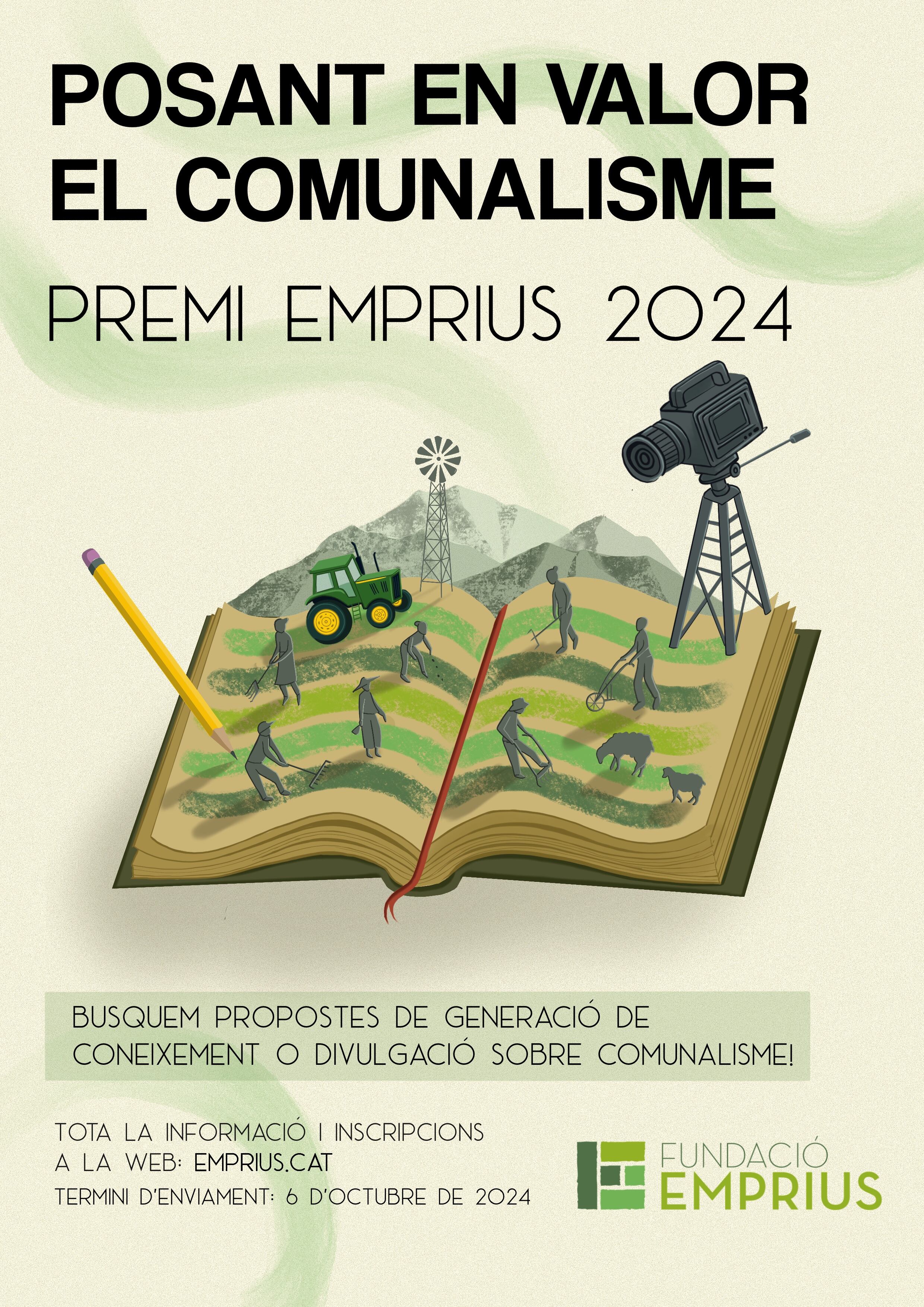
If you think it’s an interesting proposal, spread the word and share it with people and collectives who might be interested. Share our publications on social media. Here are the posters designed by the illustrator Lorena Arbeláez (you can contact her at lorena.arbelaez.a(at)gmail.com).