In the press:
- September: Un projecte de recuperació d’oliveres abandonades al Bages, Premi Emprius 2025
- Nació Manresa: El col·lectiu manresà Entre Feixes guanya el Premi Emprius 2025 per la seva proposta de gestió comunal
- Ara Balears: Emprius
- Diari La Veu del País Valencià: Un premi per rescatar “els comuns”
- Ràdio Klara: Entrevista sobre el Premi Emprius 2025
- Revista “Cooperació Catalana”: Número 499 (juliol 2025)
- Ràdio 4: Entrevista a “Vida Verda” sobre el Premi Emprius i cal Cisteller
- Xarxanet.org: Premi Emprius 2025
Winning proposal:
“Gestió comunal de terres de secà” (“Communal management of dryland”)
At Emprius, after a very positive first edition, we are organising a second edition of the Emprius Prize (Premi Emprius), a competition awarding €800 to a proposal for research, study, reflection or dissemination related to communalism.
As last year, we are looking for proposals for work to be done, not work already completed. The winning proposal will be carried out within one year following its announcement. The deadline for submitting proposals is 6 October.
The winning proposal will be announced on 8 November in Tremp, where the documentary “Fem cumó” will also be screened as a premiere — the result of carrying out last year’s winning proposal.
In the previous edition, we received 13 proposals, each presenting very interesting ideas.
We want to highlight the value of communalism: its past, which is often absent or marginal in our historical memory; what remains in the present and what is being recreated; and communalism as a future proposal to address the serious social, human and ecological challenges we face.
By communalism we understand a whole range of forms of social organisation linked to communal and collective tenure and management of resources, and communal rights over them; direct democracy and active community participation; social relations of reciprocity and mutual aid… We are committed to a social transformation where these kinds of structures, forms and logics carry ever more weight, because we think they can bring solutions to many of the problems we suffer.
We would like to see a wide variety of people eager to take part, as in the previous edition. There is no requirement to be part of an academic or university setting. Anyone resident in the Catalan Countries can participate. Full information in the Prize Rules.
As last year, we offer some ideas for possible proposals that come to mind, to help people think about what is possible and to encourage people with different backgrounds to enter the competition:
- Choose a topic for a final-year university project (TFG) or a master’s dissertation (TFM) for 2025–2026, focused on this theme. You could approach it from different academic disciplines: history, sociology, geography, environmental sciences, political science, philosophy, anthropology…
- Journalistic proposals. Choose a little-known topic that has been studied but that research has not reached the public eye, and propose a dissemination process — journalistic work and/or public awareness campaigns.
- Carry out thorough research into everything available on communalism in a particular aspect or bounded geographical area, and produce digestible summary material — written or audiovisual.
- Studies on how different systems of neighbourhood direct democracy worked (historic town universitats, councils, communal boards…), and also how they federated beyond the local level, or how they related to state powers.
- What communal assets and emprius (communal lands) remain in the Catalan Countries today? What problems and challenges do they face? How could they be strengthened and regenerate?
- In Cercs, local people are reclaiming the village’s emprius as a strategy to defend the land. In Salou, too, the site where they want to build the Hard Rock complex is called “Emprius Nord”. It would be interesting to pull on the thread of these cases, or see whether other struggles to defend the land can be linked to reclaiming the commons.
- Oral history work: video-documentary with interviews. For example, from people involved in existing communal resource management processes.
- Archive research. Look for communalism practices in historical documentation in municipal or regional archives and compile them in a format that can reach public knowledge more easily.
- Dissemination projects that include artistic elements or formats (murals, illustrations, music, theatre…).
- Studies of the different historical attacks on communal assets in the Catalan Countries: the 18th century and the Nova Planta decree, the 19th century and the liberal disentailments, the 20th century and Francoism… You could also look for episodes before these or very recent ones.
- A realistic fiction exercise: a fictional account of a region that, in 50 or 100 years, has undergone transformation and transition to a system with a high degree of communalism.
- How can communalism help solve the different challenges and problems we face in the 21st century?
If you think the Emprius Prize is an interesting initiative, help make it known, spread the word and share it with people and collectives who might be interested. Share our posts on social media, tell your friends, put up a poster somewhere…
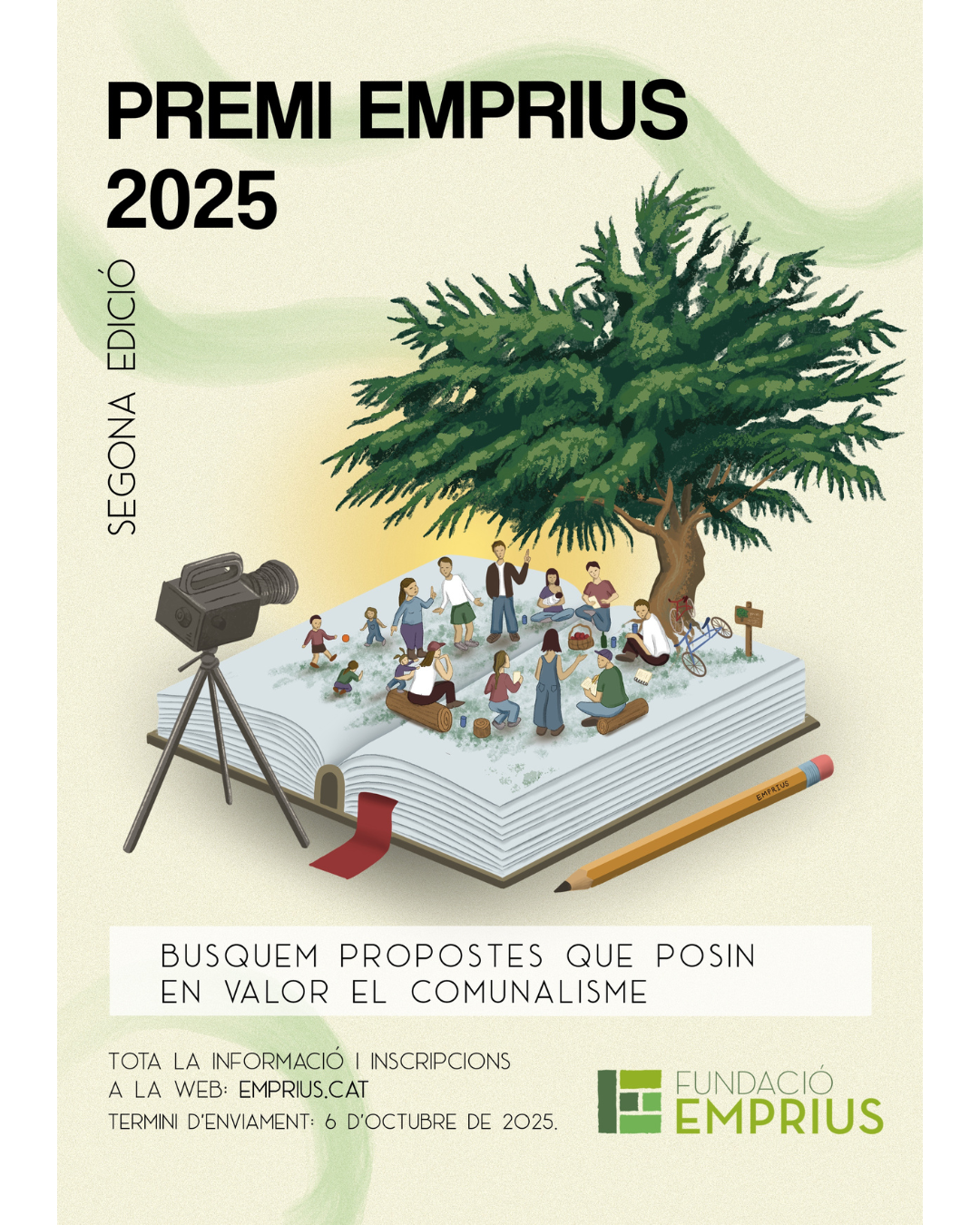
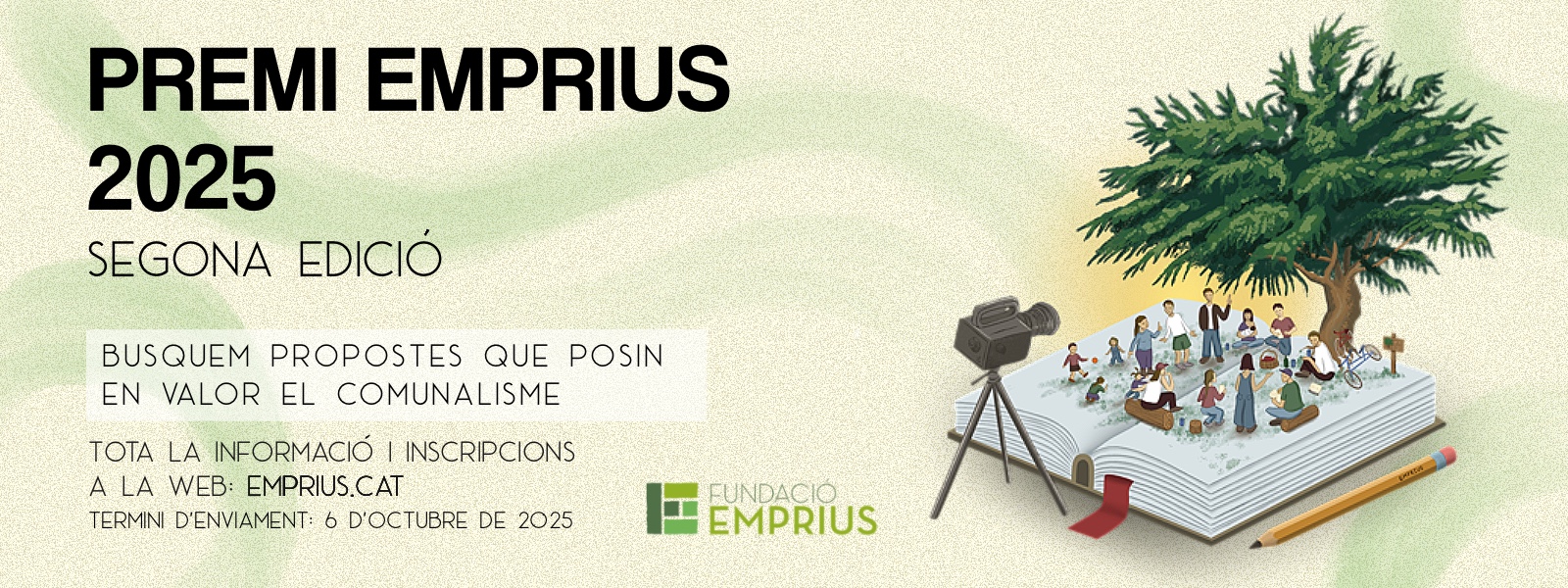
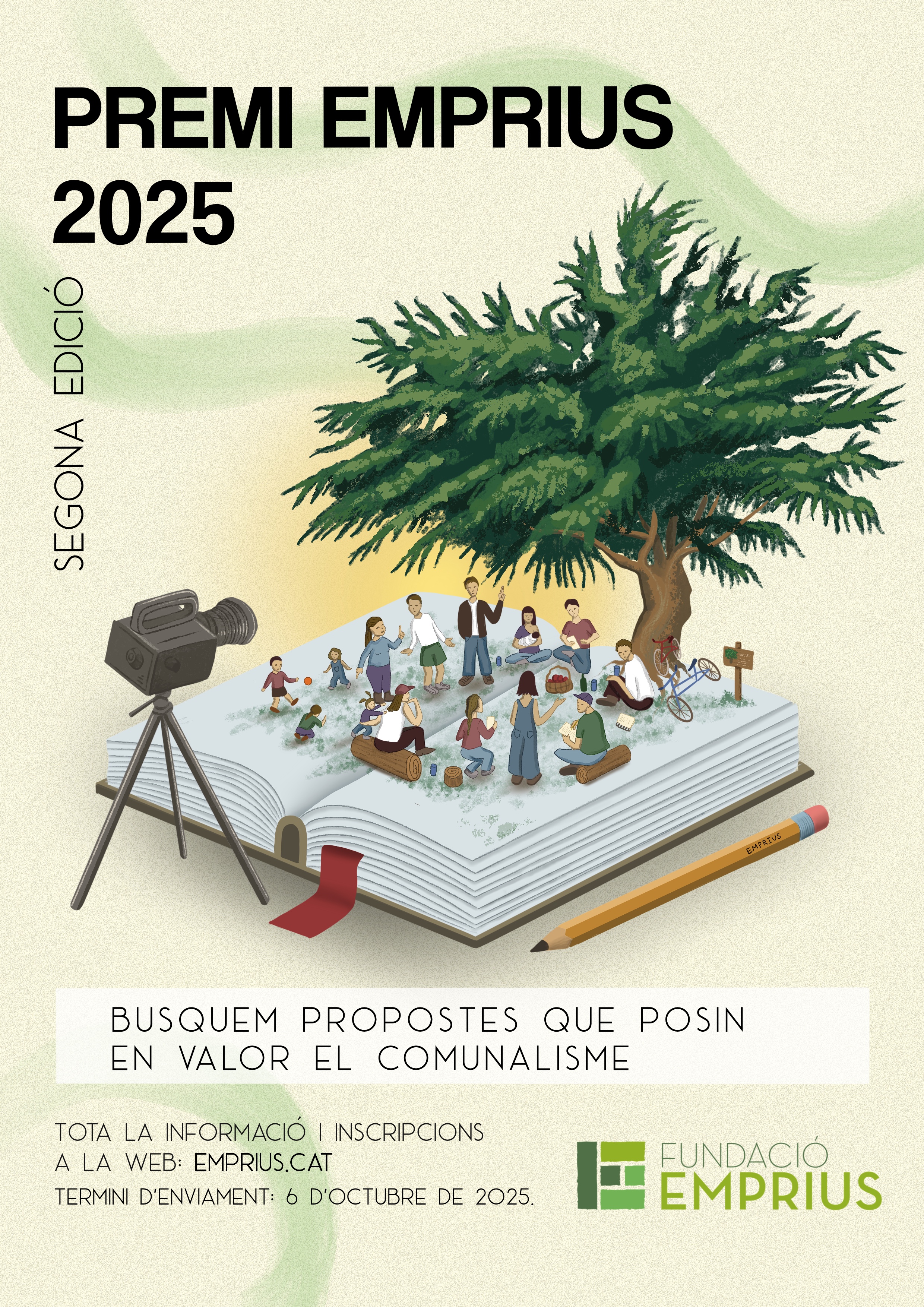
The prize poster was designed by the illustrator Lorena Arbeláez (you can contact her at lorena.arbelaez.a(at)gmail.com).