
“Gestió comunal de terres de secà” — the winning proposal of the Emprius Prize 2025!

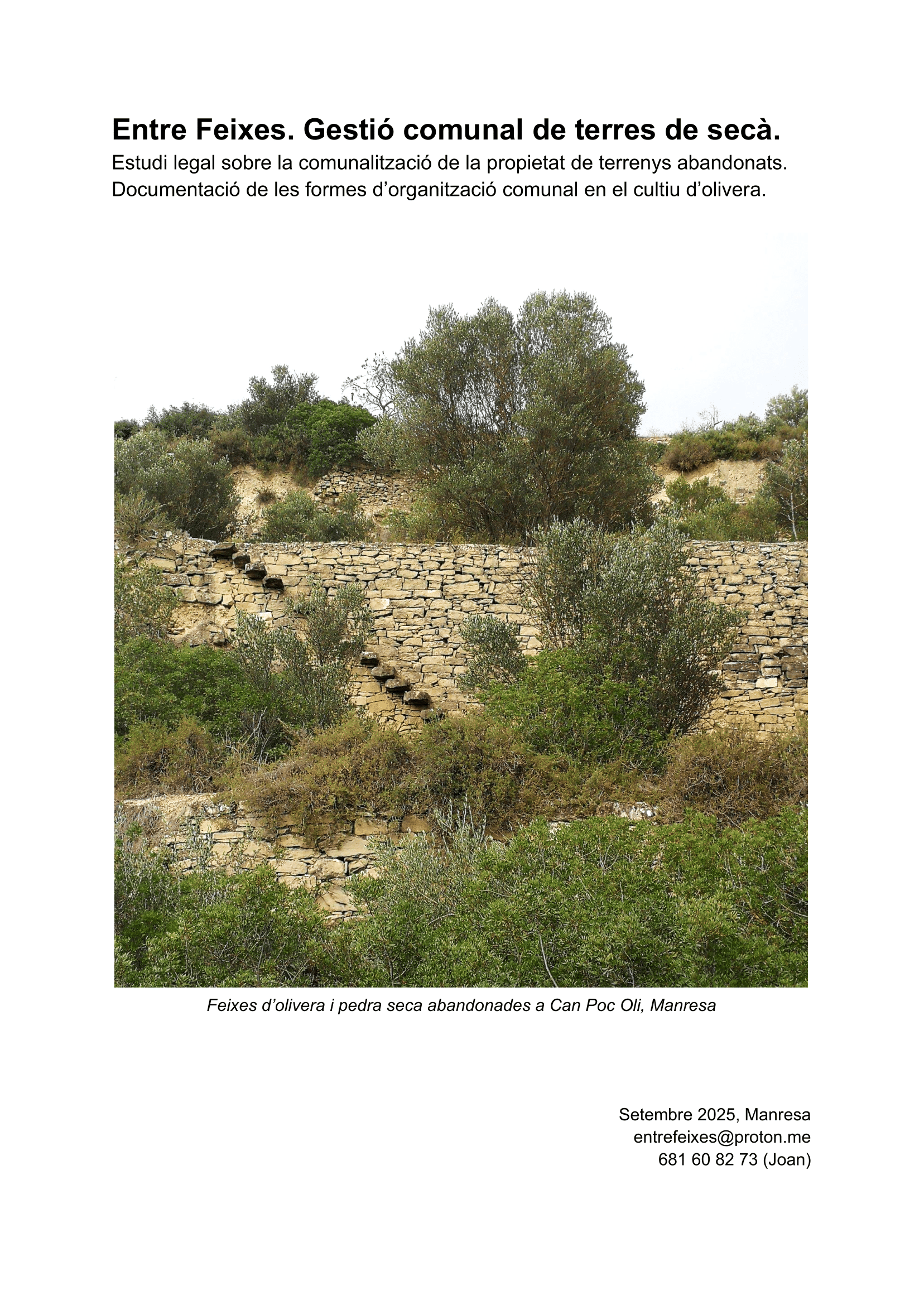
The winning proposal of the Emprius Prize 2025 was “Gestió comunal de terres de secà” (opens in a new tab) (“Communal management of dryland”), presented by Entre Feixes (opens in a new tab), a self-managed collective for the recovery of dryland crops in Manresa and the surrounding area. You can download the proposal in PDF here (opens in a new tab).
This was the jury’s unanimous decision, reached after meeting two weeks earlier to deliberate and decide.
We announced it exclusively on 8 November in Tremp, at an event where we also premiered the documentary “Fem cumó, un altre camí” (“Doing cumó: another way”), the outcome of the winning proposal from the 2024 Prize.
The proposal
The winning proposal consists of two parts:
First, the creation of a legal guide explaining the feasibility, form and procedure for potentially acquiring parcels of land with undefined ownership, to transfer them to ownership by an entity that ensures shared access and communal management. The legal mechanism initially explored would be adverse possession.
Second, the creation of a document that shows and structures different forms of organisation in collective olive management. This will be drafted based on interviews with collectives already experienced in group olive farming, assessing aspects such as openness to new participants, decision-making, managing different levels of involvement, task organisation, cost and harvest sharing, collective machinery ownership, compensation for use and wear of private machinery, and more.
Both documents will be shared by Emprius and available to everyone. The deadline for implementing the proposals, as set out in the Prize Rules, and as in the previous edition, is one year.
In the proposal presented, they explain:
“The arrival of textile industrialisation in the early 20th century brought the gradual abandonment of farming in the Bages region, including olive growing. Another key moment that triggered the decline was the frosts of 1956 and 1962. Fortunately some crops survived and frost-damaged olive trees didn’t die, they regrew. Today many of these olive parcels are in abandoned condition, overgrown with vegetation, walls fallen and access blocked.”
The collective
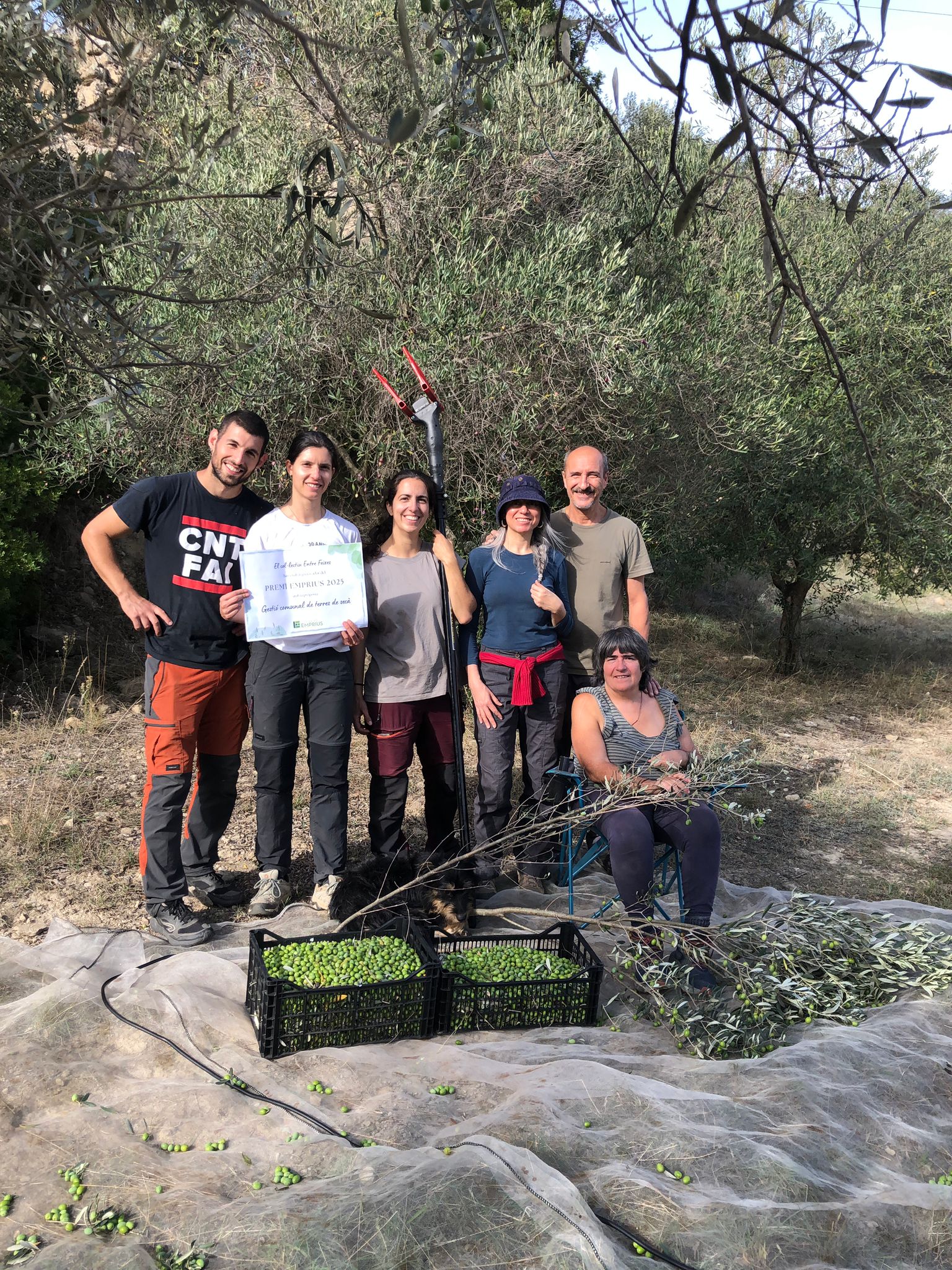
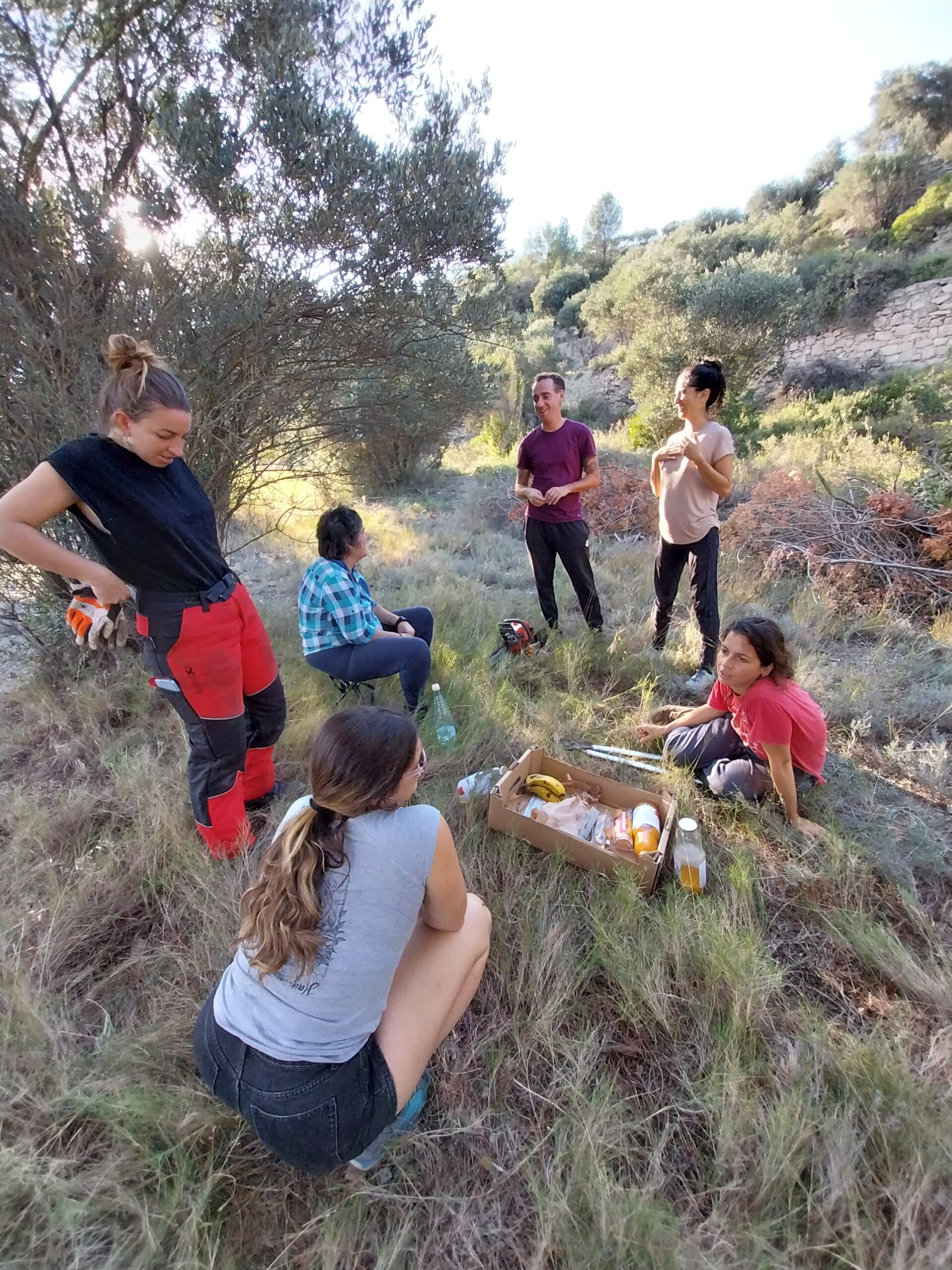
Entre Feixes is an open, self-managed collective working together on the recovery of abandoned dryland around Manresa. It emerged in 2023 following a proposal from the Comunalitat Urbana de Manresa to the city’s social movements, and has consolidated in 2025, involving over 50 people in the harvest — collective members, supportive people and visiting students.
When they tried to contact the owners of the disused land, they were surprised to find that many plots had no defined ownership. So the collective started working on parcels near the tower of Santa Caterina, but eventually settled on wider, more accessible terraced plots (feixes) in the Can Poc Oli area.
At Entre Feixes organisation and decision-making is horizontal; everyone contributes whatever time, energy and tools they can at any moment, and both costs and harvest are shared according to each person’s involvement that year. This approach allows everyone to adapt to their own life circumstances and at the same time come together to work in nature and good company, recovering agricultural and cultural heritage, building community structures, and ultimately producing their own oil.
You can follow them on Instagram: @entrefeixesmanresa
The jury
The jury of this second edition of the Prize, as explained in the Rules (opens in a new tab), consisted of:
David Algarra Bascón. A computer scientist by profession, scholar of history from below, author of “El comú català. La història dels que no surten a la història” (“The Catalan commons: a history of those left out of history”) and other articles on the subject. Federica Ravera. Researcher at the Geography Department of the University of Girona. With a background in rural studies and activism, and agroecology research, she works mainly in mountain areas, on gender issues and from an ecofeminist perspective. Author of the book
“Dones de la muntanya” (“Mountain women”). David Segarra i Soler. Journalist, documentary filmmaker and graphic designer. Director of documentaries and audiovisual work including “Savis de l’horta”, “Renaixem”, “Per molt que bufe el vent”… Aida Iglesias de Prada. Sociologist and editor of Pol·len Edicions. She is currently working on editing a book about the montes veciñais en man común, Galicia’s communal neighbourhood woodlands. Joan Pedragosa. Member of Emprius and the project Reconstruir el Comunal (jury member with voice, but voting rights only in case of a tie, which did not occur).
The prize
The Emprius Prize aims to champion communalism: what has existed in the past, which generally occupies no place or a marginal place in our historical memory; what remains in the present and what people are trying to recreate; and communalism as a future proposition, to face the crises and challenges ahead on social, human and ecological levels.
By communalism we mean a range of social organisation forms related to the communal and collective ownership and management of resources, and communal rights over them; direct democracy and active community participation; social relations based on reciprocity and mutual aid… We are committed to social change where these kinds of structures, forms and logics carry increasing weight, because we believe they can help solve many of the problems we face.
The prize is €800. Half is given now, and the other half when the work described in the proposal has been completed, within a maximum of 1 year.
We at Fundació Emprius will do everything we can to publicise the completed work, so it has the widest reach and social impact possible.
Historical background
Between 1897 and 1918, the Real Academia de Ciencias Morales y Políticas organised 21 competitions for work on “customary law” and “popular economy”, matters closely related to the historical communalism of rural peninsular life. 50 essays were submitted and 22 were awarded. The academic interest of that era was generated by works such as “Colectivismo agrario en España” and “Derecho consuetudinario y economía popular de España” by Joaquín Costa.
We at Emprius hope our contribution helps champion communalism, not just in academic circles.
Documentary from the previous winning proposal
The implementation of the winning proposal from the previous edition of the Emprius Prize has produced a documentary, which will be screened in various spaces across the region in coming months (anyone can organise a screening in their village or neighbourhood). It’s called “Fem cumó, un altre camí”, and you can find all the information about the documentary here.
Emprius Prize 2026
At Fundació Emprius we plan to organise a third edition of the Emprius Prize next year. People or collectives who took part in previous editions and didn’t win can apply again.

You may also like

The housing struggle is also rural
Without affordable housing and land outside the market, there can be no agroecological transition

[Presentations and report] “Communal assets today” conference at the UB
Presentations with slides from the talks available here:
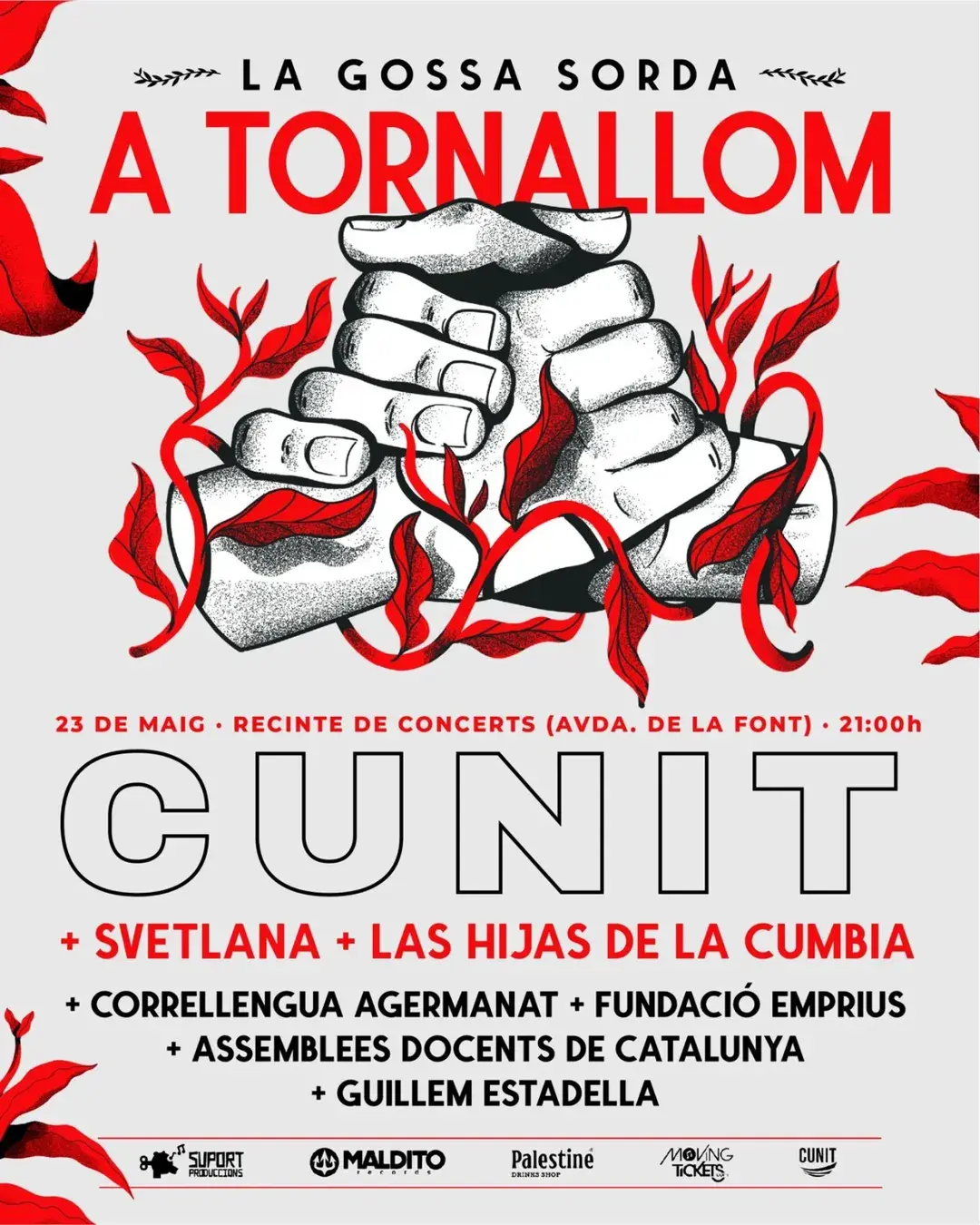
Emprius at the La Gossa Sorda concert
The Valencian band La Gossa Sorda, at their first double concert in Catalonia after 10 years without performing, gave a platform to different organisations…